New Logo In Action: Renaissance Hotel is Now Renaissance

Logos change all the time, but it’s not every day you get a chance to see a logo change right before your eyes. The other morning I was walking to work past 1 West Wacker Drive and saw sign company workers changing out the signs at what used to be called The Renaissance Hotel and is now just Renaissance. I felt like I was living inside the Brand New blog, which has analyzed old and new logos side-by-side for years now.

Here’s the old and new signs together:

New Logo for Renaissance Hotels

The new is just a stylized R and a single word:

New Logo for Renaissance Hotels

While the old sits captured on a truck:

New Logo for Renaissance Hotels

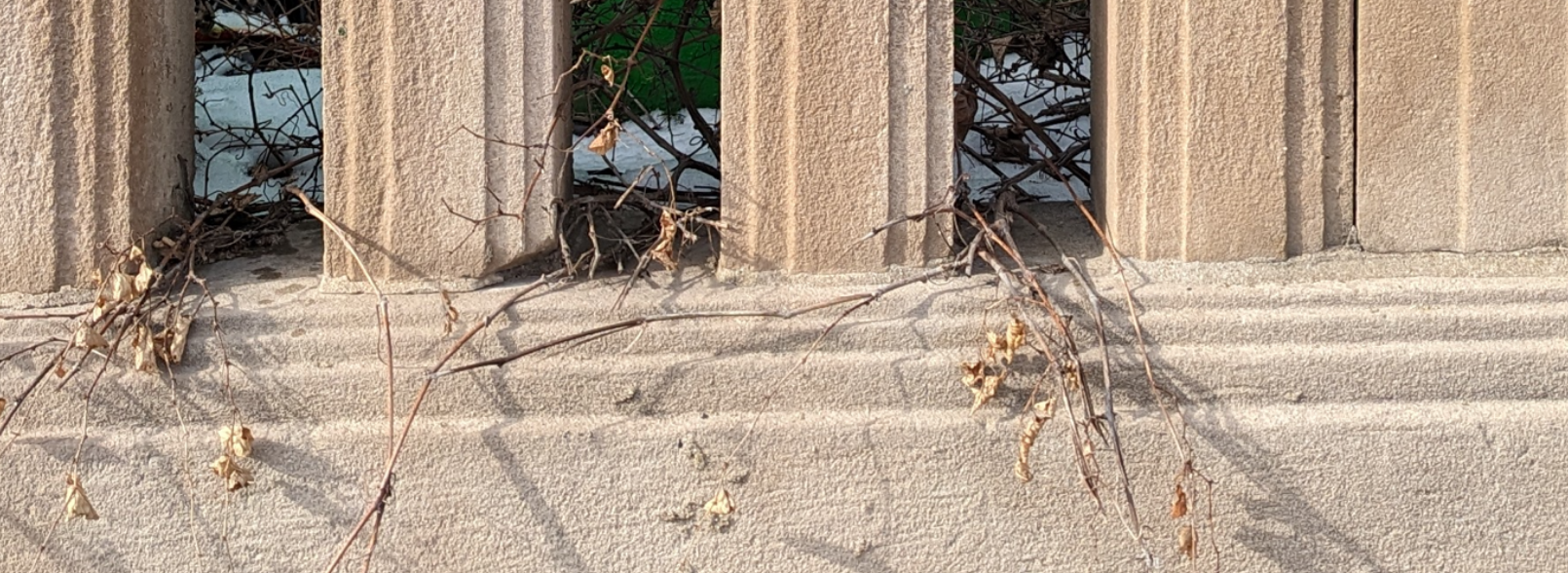
And then there’s the fateful wall-based change, which never really seems to go well without a thorough cleaning and masonry work to eliminate negative space and outlines of the former typography:

New Logo for Renaissance Hotels

Can’t wait to see what Under Consideration LLC has to say about this…

New Walgreens in the Old Noel State Bank Building at 1601 N. Milwaukee (corner of North, Milwaukee, and Damen in Bucktown/ Wicker Park)

Photo courtesy of the Cook County Assessor's Office.

NOTE: This post is an aggregation of information on 1601 North Milwaukee Avenue in Chicago, which is currently being made into a Walgreens. This info was compiled mainly via Web searches and deep dives into public databases. It serves as a specific manifestation of a broader idea– that the City of Chicago contains a mountain of info about the space around us, it’s just unevenly distributed. Making tools to automate the process of turning this raw information into actual knowledge that helps shape our civic actions should be a priority for Chicago developers in the coming year.

A New Store in an Old Building

I’ve watched the work at the new Walgreens at 1601 N. Milwaukee, at the corner of North, Milwaukee, and Damen for a few months now, and I’m really excited about this place. The bank building is wonderful, and it looks like the build-out is going to be respectful of the original architecture. This has always been a dead corner on an integral six-corner piece of the city (I moved into the neighborhood in 1985 and can’t remember anything of interest being there, ever), so I really want to see this new store be an anchor.

The work done to date has been some tuckpointing and painting of the exterior and a general fix-up of the inside (described in full below).All of this work seems to be very preparatory and there’s nothing about the inside that indicates that a Walgreens will be in there any time soon.

I hope that the build-out mirrors the CVS in the old Home Bank and Trust Company building at the corner of Ashland and Division, with some improvements. I love that store, and I appreciate the care they took in maintaining the architectural features of the place.

CVS on Division and Ashland, Chicago

Having said that, the (original?) doors are very heavy/ hard to open and the store has a “dead air” feel to it. That might have something to do with the soaring height and relatively small footprint of the place. Also, the layout/ flow of the store is even less friendly than most CVS stores. No matter what you buy, you have to double back to the cash register. I’ve never seen the registers in the back of the store open, either–that might help to establish a better feel.

Door Detail of CVS on Division and Ashland, Chicago

I wanted to create this post just to aggregate as much info I could about the building and track the progress of the store. I’m interested in the history of the place (hence the Sanborn research– thanks, Jen!), civic process (zoning, permits, licenses), architectural detail (especially the glass ceiling), store format type, and the impact that such a project has on a neighborhood.

History

The building started life in 1920 as the Noel State Bank Building at the corner of Robey (now Damen) and Milwaukee. Taking a look at the 1914 Sanborn map for the area, the block had a wagon shop, a wholesale liquor establishment, a post office substation, a paints & oils place, two mattress factories (one with an electric motor), and a tailor shop with wood posts and electric power. As an aside, the tailor shop building now houses a place where they seem to have a never-ending string of weekend customers who want their eyebrows tailored. There were six separate buildings (1601, 1607, 1609, 1611, 1613, and 1615 N. Milwaukee– none of which were labeled with any particularity– where the bank would be built. Here’s the full Sanborn sheet (best viewed large) and a snip below (lower right):

This is a snip of the 1914 Sanborn Map of 1600 Block of North Milwaukee. The six properties that will make up the Noel State Bank are in the lower right triangle.

The next Sanborn map I have for the area is 1950, has the place all decked out. Here’s the full Sanborn sheet (best viewed large) and a snip below:

This is a snip of the 1950 Sanborn Map of 1601 North Damen Noel State Bank. As usual, there is great detail on many of the properties shown.

Note that this schematic refs a mezzanine in the front and back of the bank. You can see the front mezzanine in this recent pic. I wonder what they’ll put up there. Would be a nice breakroom. Or maybe their copious user-driven photo processing equipment. The Cook County Assessor’s Office PIN number for the property is 14313320180000.

Once you’ve got the PIN, you can go to the Cook County Recorder of Deeds to look up info about ownership of the property. Lots of action on the property, all of which map nicely to the news coverage:

Recorder of Deeds Page for 1601 North Milwaukee Ave.

Civic Process

1601 N. Milwaukee, Noel State Bank Building, Being Outfitted for a WlagreensGoing from a long-empty building in a neighborhood that has experienced lots of change and growth to a new business can be a long, arduous process. Here’s what I’ve gleaned from a search of the topic from a number of sources :

CBS2, April 26, 2011 (quoting Crain’s, whose story is unavailable w/o login) has the deal on the zoning change necessary to make it viable retail: Committee OKs Zoning Change For Old Wicker Park Bank

Crain’s Chicago Business reported Tuesday that the owners of the Midwest Bank building at 1601 N. Milwaukee Ave., are seeking the zoning change. The owners took over the two-story, 15,500 square foot building through a deed-in-lieu of foreclosure, and are now seeking retail tenants, Crain’s reported. Currently, according to the Zoning Committee, the building is zoned for both retail and manufacturing. The proposed change would change the zoning just to retail. The terra cotta building was completed in 1919 as the Noel State Bank building, according to the City of Chicago. It was later a Fairfield Savings Bank and most recently, Midwest Bank.

Racked, May 13, 2011 had the goods on the Walgreens moving in: Breaking: Walgreens to Take Over North / Milwaukee / Damen

Some new information just came our way that leads us to believe that this landmarked building at the six corner intersection of North Avenue, Milwaukee Avenue and Damen will soon become the latest location for the Midwest’s pride and joy: Walgreens drugstore.

The Building is fifteen thousand square feet split between two stories and will become similarly occupied as many of the other projects we’ve been seeing develop around Wicker Park and Bucktown. The facade will be power washed, the windows will become clear and appear to be larger by eliminating window frames allowing for more light into the space. Finally, a large non-lighted “W” sign is to be installed on the corner but plans shall be further studied in case there is a possibility the sign obscures the building’s character-defining features.

RedEye Chicago, June 8, 2011 has info on architectural detail: What’s the deal with Walgreens?

UPDATE (1:50 p.m.): Walgreens spokesman Robert Elfinger has confirmed that Walgreens has signed a lease in 1601 N. Milwaukee Ave., with a tentative opening of winter 2012. Burck didn’t know much about the project, except what was discussed in an April Commission on Chicago Landmarks meeting, which included a vote to keep the 14 ground-floor windows the same size (there was a proposal to enlarge the window openings) and an agreement to continue to study the location, size and design of a large “W” sign so that no building details are obscured.

I looked up the meeting minutes on that meeting on the Commission on Chicago Landmarks page on the City Web site. It was actually the March meeting. Here are the details:

1601 N. Milwaukee (Milwaukee Avenue District – 32nd Ward)

Proposal: Proposed rehabilitation and conversion to a retail use of a 3-story limestone bank building, including masonry repair and repainting, enlargement of ground-floor window openings, window replacement, and new retail tenant signs.

Action: Approved unanimously with the following conditions:

1. The fourteen ground-floor window openings, proposed to be enlarged, are original character-defining features on primary (street) elevations of the building, and the size of the openings shall not be changed. However, given that the existing windows are not historic, and in furtherance of the intended retail use of the building, the replacement ground-floor windows need not match the original configuration but may be undivided picture windows with minimal framing designed to maximize the amount of glazing areas

2. As proposed, all new replacement glass shall be clear glass. Existing and proposed dimensioned window and door details, and their proposed finishes, shall be included in the permit plans;

3. The fixture plan shall be further studied. Areas behind the windows should be kept open and unobstructed to allow transparency and views into the building. Additional information about the build-out behind the windows, any proposed window signage, and merchandising installations shall be provided for Historic Preservation staff review and approval as part of the permit application;

4. Masonry cleaning, repair, and replacement details shall be included in the permit application plans. Samples of any replacement stone, patching, and mortar shall be reviewed and approved by Historic Preservation staff prior to order and installation. Any new limestone shall match the unpainted limestone in color, texture, and finish; and any new mortar shall match the historic unpainted condition in color, profile, and composition;

5. A conditions analysis of the paint and stone shall be performed by a qualified materials engineer/conservator to determine the appropriate paint product type, color, and finish for the existing painted limestone. The analysis and paint specification shall be submitted for review and approval by Historic Preservation staff prior to order and application;

6. As proposed, no exterior light fixtures shall be mounted to the stone facades;

7. The location, size, design, and attachment details for the large “W” sign shall be further studied so as not to obscure character-defining features such as windows and to ensure that it will not adversely affect the building or the district. [A possible location is the wall area below the proposed window location.] The four signs proposed above the doors should be relocated to the flat stone jambs above the door and below the beaded stone molding, or could be relocated to the flat stone pilasters next to the doors and designed to appear like plaques. The other proposed sign areas, the two locations along the stone sign bands at the parapet and the proposed projecting banners mounted at the stone pilasters are approved in concept only. A rendering showing all proposed signage shall be submitted to Historic Preservation staff as part of the continued review. All future signage including material, color, attachment details, sizes, lighting and other information shall be reviewed and approved by Historic Preservation staff prior to order and installation. The signs shall be designed with as few attachments to the masonry as possible, and with attachments preferably located at the mortar joints; and,

8. The proposed use of the building requires a zoning change for the portion of the lot which is currently zoned M1-2. The Commission takes no position regarding the merits of any requested zoning change.

The reason this building is subject to the Landmarks Commission is because it is included in the City’s 1995 Historic Resources Survey. Here’s the record for this building in that database. I track buildings of this type in a side project called Demolition Hold List: A place for info about architecturally significant buildings in danger of being demolished (or are already gone).

Architectural Detail

I don’t have much on this at this time, since I haven’t been inside the building. I do have this set of pics I’ve taken of the place recently, including some good detail of the existing features in the entry:

1601 N. Milwaukee, Noel State Bank Building, Being Outfitted for a Walgreens

Building Permits

Google Advanced Search is handy when you're looking for info on a particular address in EveryBlock.

Here’s the building permits I could find for this building on EveryBlock:

June 7, 2011: $500,000 Permit issued for renovation / alteration

SCOPE OF WORK TO INCLUDE RESTORATION OF EXISTING MASONRY, WINDOW AND DOOR REPLACEMENT, AND DEMOLITION OF EXISTING NON STRUCTURAL INTERIOR PARTITION WALLS

August 24, 2011 Permit issued for renovation/alteration

INTERIOR AND EXTERIOR ALTERATIONS PER PLANS FOR PROPOSED RETAIL WITH PHARMACY( WALGREENS) PER PLANS. CONDITIONAL PERMIT SUBJECT TO FIELD INSPECTION.

December 7, 2011: $255,700 Permit issued for elevator equipment

Install two (2) escalators and one (1) 3000#, 125 fpm, 3 stop hydraulic passengers elevator pursuant to plans submitted and subject to City of Chicago DOB Elevator Bureau inspection.

Business Licenses

I turned to the City of Chicago Data Portal for business license info.

There’s nothing yet from Walgreens, so there is no opening planned at this time. The only thing I found was a 3-day “Itinerant Merchant, Class II” license for a “James Perse Sample Sale” from May 20 – May 23, 2010. Otherwise known as a pop-up store. Here’s a vague invite for the event (no address). I wish I would have seen this– would have been good to get inside. Here’s Racked’s coverage of a similar sample sale on Walton in December 2011.

That’s all I’ve got for now. Check back for updates and please provide any info in the comments.

UPDATE, December 31, 2011:

Noel State Bank, Closed on June 18, 1931, Due to "heavy withdrawls in the last few days"
___

Here are links to a few other deep-dive civic posts that I’ve made over the years:

On A Walk, Christmas Day 2011

We took a walk in Lincoln Park yesterday in bright blue Chicago. Here are some pics.

Bench overlooks barren great garden and waits for lush return.

Lincoln Park Chicago, Christmas 2011

I have no idea what kind of trees these are that produce such bright orange limbs:

Orange-Limbed Trees, Lincoln Park Chicago, Christmas 2011

The sublime blues of Jeanne Gang’s People’s Gas Education Pavilion seem so stark:

Peoples Gas Education Pavilion, Christmas Day 2011

But can be rich tan one second later:

Peoples Gas Education Pavilion, Christmas Day 2011

General Grant and his horse never gets to gaze upon it:

Lincoln Park Chicago, Christmas 2011

Though they sit above a tone walkway with similar radius to the pavilion:

Lincoln Park Chicago, Christmas 2011

Dozens of birds chirp in season:

Birds in Tree, Lincoln Park Chicago, Christmas 2011

The underpass work is nearly done:

Underpass Beneath LaSalle Street Approach from Laske Shore Drive, Lincoln Park Chicago, Christmas 2011

One can get lost in horizons:

Lincoln Park Chicago, Christmas 2011

The Sadness of Deferred Maintenance at the State of Illinois Building

I have always loved goofball architecture. I can’t pass a Brutalist structure without stopping to marvel at it.

And there was nothing goofier than the State of Illinois Building (160 North LaSalle St.) when it opened in 1985. I went by there the other day and was bummed to see how muffed up the place was. Here’s a complete set of pics, and here’s some examples:

Paint scraped off glass panels:

The Cost of Deferred Maintenance at the State of Illinois BuildingEvidence of at least one vehicle impact:

The Cost of Deferred Maintenance at the State of Illinois BuildingSome serious lime issues:

The Cost of Deferred Maintenance at the State of Illinois BuildingPhantom cutouts:

The Cost of Deferred Maintenance at the State of Illinois BuildingThe Dubuffet isn’t doing all that well either:

The Cost of Deferred Maintenance at the State of Illinois BuildingI know there are some issues with budget here in our state, and we have many human needs, but we can do better than this, no?

Logan Square Land Use: Mega Mall Block Through Time — Emptiness, Movie Theaters and Auto Dealerships

Lately, after having been schooled by architecture & design educator Jen Masengarb on the topic, I have had a mini-obsession with Sanborn Fire Maps in Chicago. She obtained a set of maps for the area around my apartment in Logan Square for 1896, 1921, and 1950 and helped me (and some other nerds) analyze these treasures.

The thing that interested me most about these maps were the changes in land use through time. We all know there is often a lot of heat around how we use the landscape to serve our needs. One element that I think is often lost in these discussions is a simple, towering, fact: things change.

In land use discussions, we tend to constuct narratives that go back as far as make sense to us or support our arguments. But seeing these plain maps, with no judgements applied, and the context of time stripped from them, makes us see another view that really doesn't have anything to do with us. And that is refreshing to me.

So the first area I zeroed in on was the Mega Mall block– the 2500 block of North Milwaukee Avenue. Here it is in each map:

1896: The Mega Mall Block, Logan Square

Mega Mall Block, 1896

1921: The Mega Mall Block, Logan Square

Mega Mall Block, 1921

M 1950: The Mega Mall Block, Logan Square

Mega Mall Block, 1950

The number one/ most obvious observation here is how underpopulated the area is in 1896. There are basically a set of empty lots, waiting to be built upon. Like a sad suburban subdivision with no chance of success. It reminded me of this shot I took of vestigal driveway curb cuts in Charlotte, NC:

Vestigal Subdivision Driveway

By 1921, there was some action on the block. The Milshire Hotel (2525 N. Milwaukee Ave)  was there by then. It's still standing, still serving:

The MegaMall Block: Milshire Hotel

The Milshire is an interesting place from the outside. Here's a snip from a TripAdvisor review from someone who's been on the inside:

I've stayed at some run down places all over the world, but this place takes the cake. First off it is a brothel, and filled with meth/crack heads. I have no idea how this place passes any inspections. I was going to a couple of shows at the Congress theater, and this place is the closest place to it, so…

The second thing I noticed was that there are no less than 13 auto dealers on this block by 1921. Here's the map, viewed large, so you can see yourself. Some of these shops are on 25-foot long lots. There are also lots of repair shops on the street behind Milwaukee (north of WIllets and Sacramento). Many of the structures from these auto dealerships (including the Mega Mall) remain. One can easily picture the bricked-up portion of this building as a picture-window showroom at 2511 North Milwaukee:

The MegaMall Block: Former Car Dealership

Who knew that it used to be the Western Avenue of Chicago? I had no idea that the auto industry was even that robust at this time– big enough to support 13 dealerships on one city block. But since the first auto assembly line was in 1913, the timing pretty much makes sense.

The next thing worth mentioning is the movie theaters. In 1921, it seems there was a large movie palace– the Rio Theater at 2540 N. Milwaukee– in the empty lot north of the Mega Mall next to where the Blue Line goes underground northbound.

Screen shot 2011-05-06 at 4.14.42 PM

Rio Theater, 1921

One thing I don't understand is the Logan Square Theater, directly across the street to the east at about 2547 N. Milwaukee:

Screen shot 2011-05-06 at 4.31.18 PM

Logan Square Theater, 1950

Part of this is clearly the Logan Square Affiliated Physicians Building (2551 North Milwaukee Ave), pictured here, from the other day:

The MegaMall Block: Former Logan Square Theater

Logan Square Theater, 1950

But what I don't understand is if the buildings to the north are part of the theater as well. I think this may have to do with the way the maps start and end. Here's the large version of the 1950 map for your perusal. Very little had changed since 1921, it seems.

Here's my full set of recent photos of the block here. This block is going strong– many new restaurants, and even a new structure at the Mega Mall:

The MegaMall Block: MegaMall Addition

One day at a time, Logan Square lovers.